Intellectual Property relates to creations of the mind: inventions, literary and artistic works, and symbols, names, images, and designs used in commerce. IP is divided into two categories: Industrial property, which includes inventions (patents), trademarks, industrial designs, and geographic indications of source; and Copyright, which includes literary and artistic works such as novels, poems and plays, films, musical works, artistic works such as drawings, paintings, photographs and sculptures, and architectural designs. Rights related to copyright include those of performing artists in their performances, producers of phonograms in their recordings, and those of broadcasters in their radio and television programs.
Copyright is given to any creator of an original work whether it be written, drawn or filmed. However, copyright does not protect the idea itself, but it does protect the expression of the idea or its transfer to a medium. This is why we can have two of these jokers:


It's already a tricky issue because the creators of a comic book will never know if their work will be popular until it's too late.While copyright laws have changed over the years, the most recent one is the Copyright Term Extension Act of 1998, which fixes it 70 years after the death of the author Or "for work-for-hire, the shorter of (a) 95 years after first publication or (b) 120 years from creation." Once all of the copyrights on a creative work have expired, anyone can create an exact copy of that work. But before you start thinking your own twists in your next big fan fiction about that squirrel dame (You know. This chica), you should be advised that you're shit out of luck. The many trademarks found in comic book characters keep your grubby hands off my squirrel girl for here to kingdom come.
While DC seems to have gotten its shit together (still haunted by those rubber nipples), Marvel is in quite a pickle as Fanboy/lawyer steveorjoey of comicbookmovie.com explains:
" Marvel used to license out the rights for motion pictures in their characters to other film studios, because Marvel could not afford to make their own motion pictures. Therefore, it was more profitable for Marvel to license out the rights in an exchange for a substantial fee and a percentage of the gross proceeds from the films. Sony pictures owns the live action movie rights to all things Spider-man and Ghost Rider, Lionsgate Entertainment owns The Punisher, and 20th Century Fox owns the Fantastic Four, Silver Surfer, Daredevil, and X-Men (if you have seen any of the X-Men movies you know that it is a complete tragedy that Fox owns the rights) (FN 52). When Marvel made these licensing agreements it seemed like a great plan, but with the success of the movies and Marvel getting rich off of it they now want to make their own movies, instead of licensing it out to other companies. Unfortunately, with some of the most well known characters licensed out Marvel will have a hard time making a live action movie about a major Marvel event."
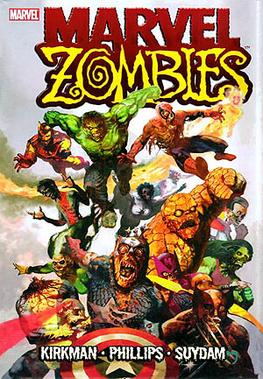
 Luckily most of the contracts include a deadline the studios must meet in principal photography. If the studios miss it, the rights go back to Marvel. That's how we got a hot AND talented Banner. However, we do have to remember that in the Marvel Realm, everything and I mean EVERYTHING is connected. The marvel comics frequently collide and crossover, so getting events like the Civil War, zombie apocalypse, or my favorite >>>>>>>>>>>>>>>>>>>>>>>>>>>>>>>>>>>>
will be almost impossible if Marvel doesn't start playing more dirty. It could be worse although. They could have Allen Moore's almost literary misfortunes: http://www.wired.com/underwire/2010/07/alan-moore-watchmen/


It sounds like IP has a cultural force of its own, where films like Unbreakable (M. Night Shyamalan) are not only dissolving the medium conventions between comics and films (among many other previous films), but perhaps finding an alternative to paying heed to IP and copyright. Do you think that is a motive? I'm also intrigued if you think there is a potential reverse from films adopting comics to comics adopting film techniques.
ReplyDeleteWhile I haven't seen Unbreakable, I think I understand its premise.(Bruce Willis believes himself to be a superhero of sorts through Samuel L. Jackson?) When I read the synopsis, it seemed to me that the goal was to discuss the mythos of superhero comics through the use of a nondescript hero. I think it worked well in that case; the story seems to have more meaning by avoiding an alignment with any known Supes.
ReplyDeleteAs for comics to film, I wholeheartedly agree based on what I've read in Frank Miller's comics. They bear a style and cinematography similar to what I've seen in old film noir. Watchmen is perhaps also an example of this trend because its structure is reminiscent of post-modern film techniques like the nonlinear narrative.